 View at full size
NODE.GARDEN
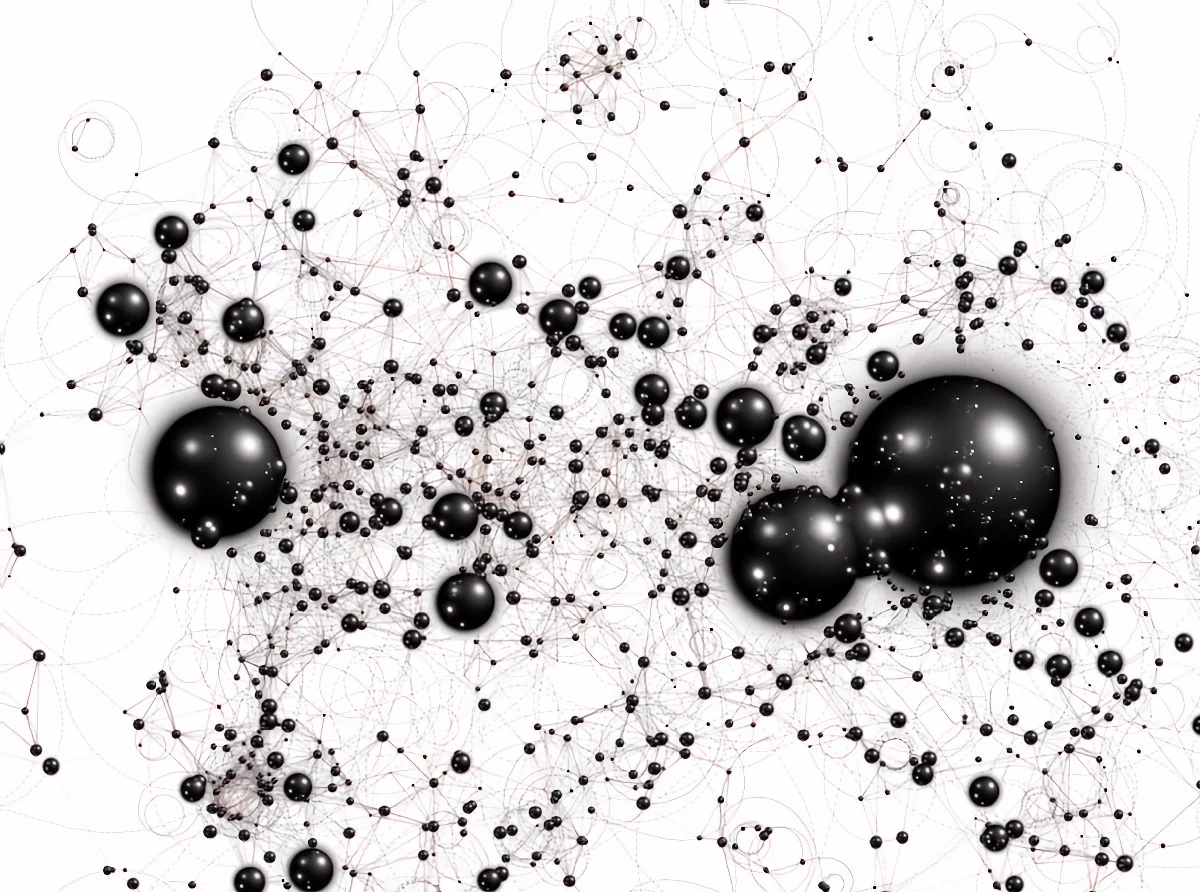
Nodes are instantiated on irregular curving lines. When connected together, they form a Node Garden. The lines can be considered the substrate from which the nodes grow.
The linear arrangement of the substrate in these early images is mathematically simple and makes irrigation of resources easy.
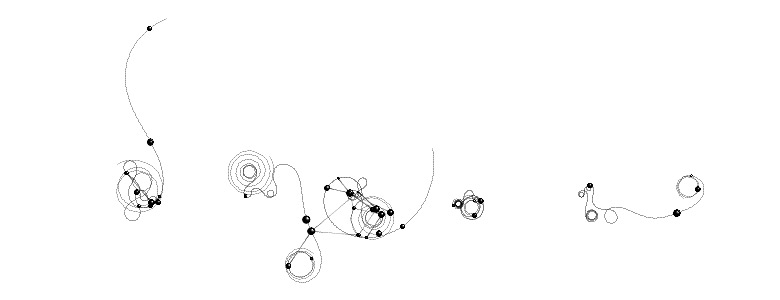
0000 early gardening attempts
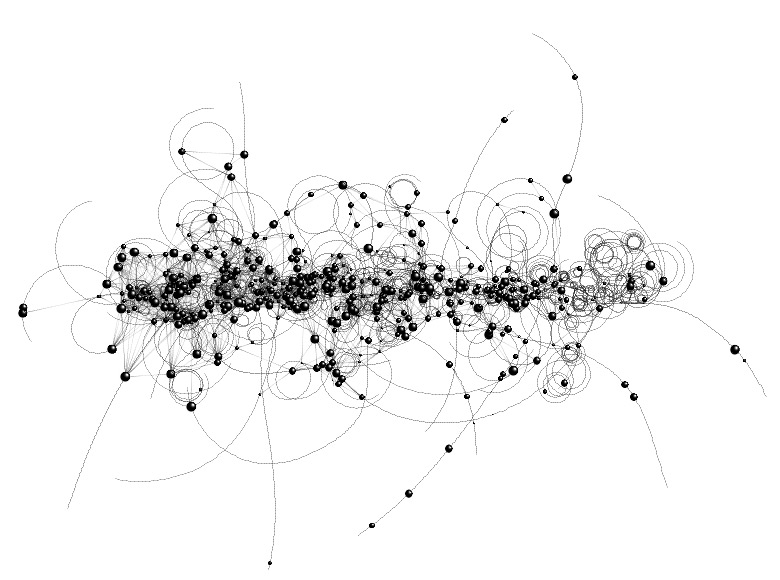
0001 a few more nodes and the garden seems to be holding up nicely
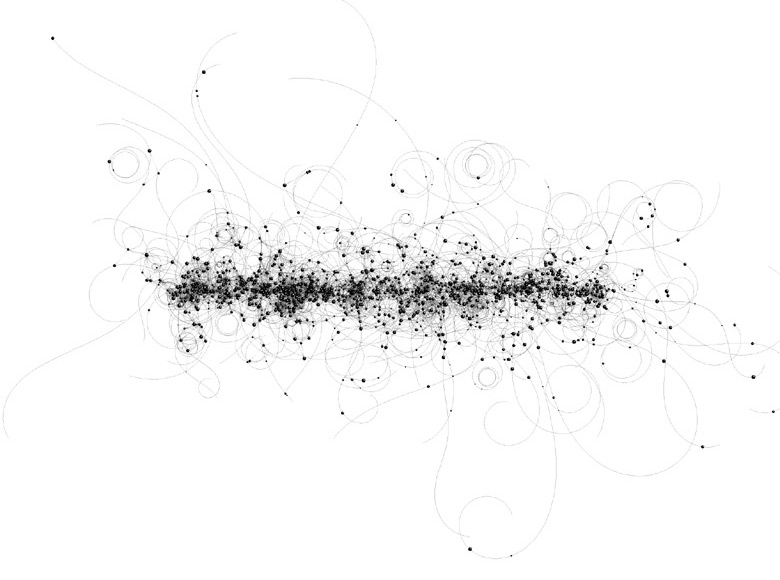
0002 now a few thousand (shown here reduced several times)…
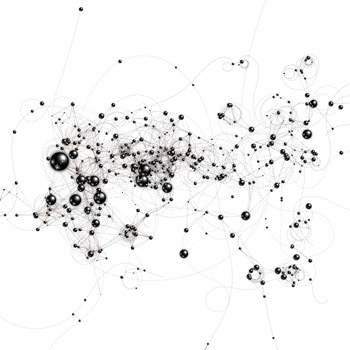
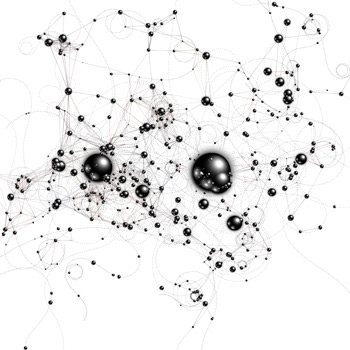
Things begin to get interesting when nodes are allowed variable mass. Now connections between the nodes are a function mass. The larger a node, the further away it can make connections. Connections have been drawn in color to differentiate them from the substrate.
The potential mass of a node diminishes further out on each substrate path.
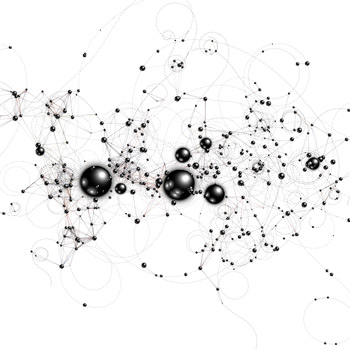
1000
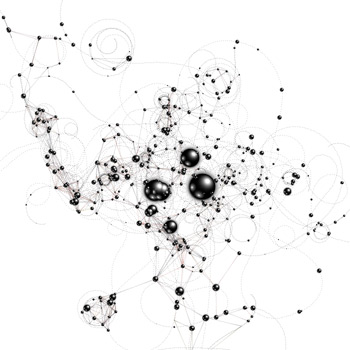
1001
1002
1003
Substrate paths are allowed to wander further and with increased irregularity. The Node Garden appears to posses unintended structure with larger more established nodes near the center.
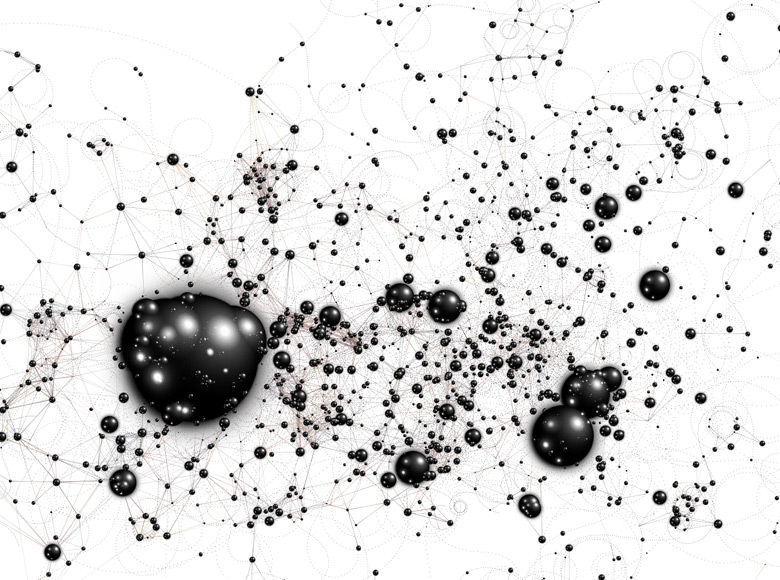
2000 a nice garden of healthy nodes
It is interesting to note that nodes are connected together in two distinct networks; one of the substrate paths, and one of the inter-node connections.
3000 linear substrate
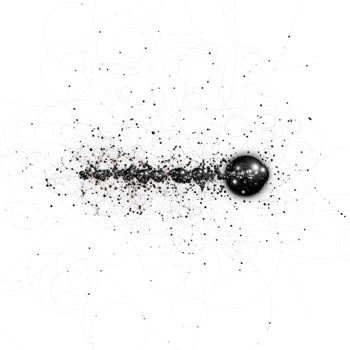
3001 linear substrate
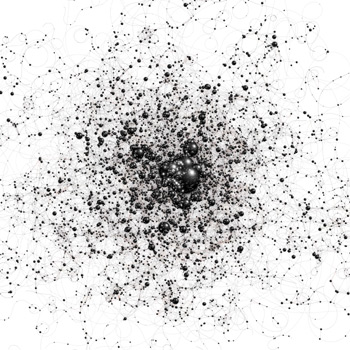
3002 point substrate
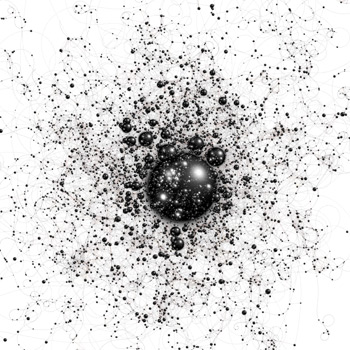
3003 point substrate
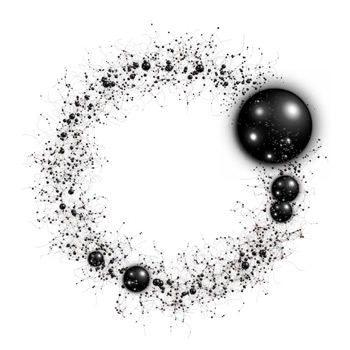
3004 radial substrate
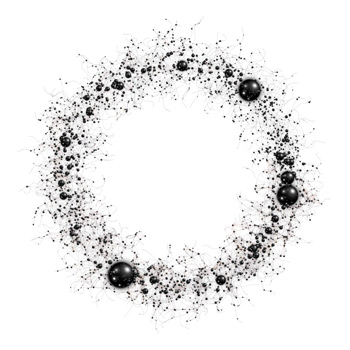
3005 radial substrate
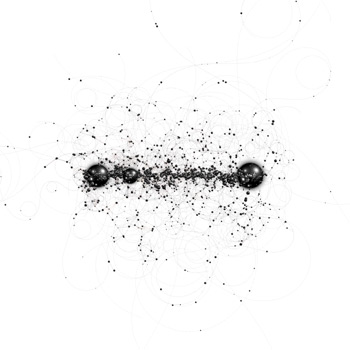
Variations in the way substrate paths are instantiated produce distinctly unique compositions. Substantial irregularity is generated from the same basic algorithm due to the high number of random calculations.
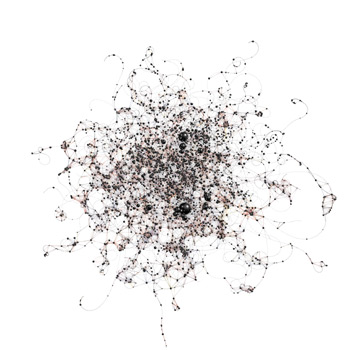
4000
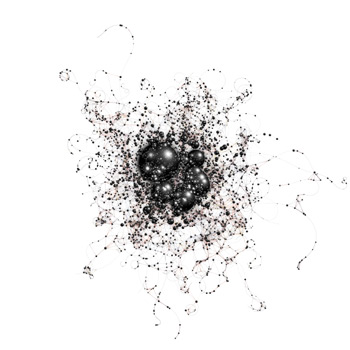
4001
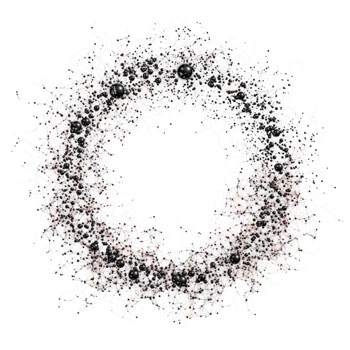
4002
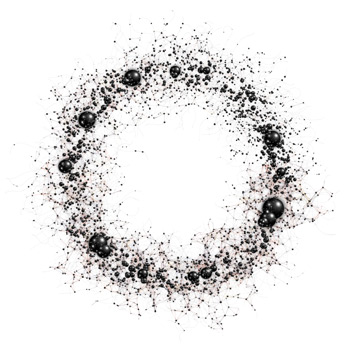
4003
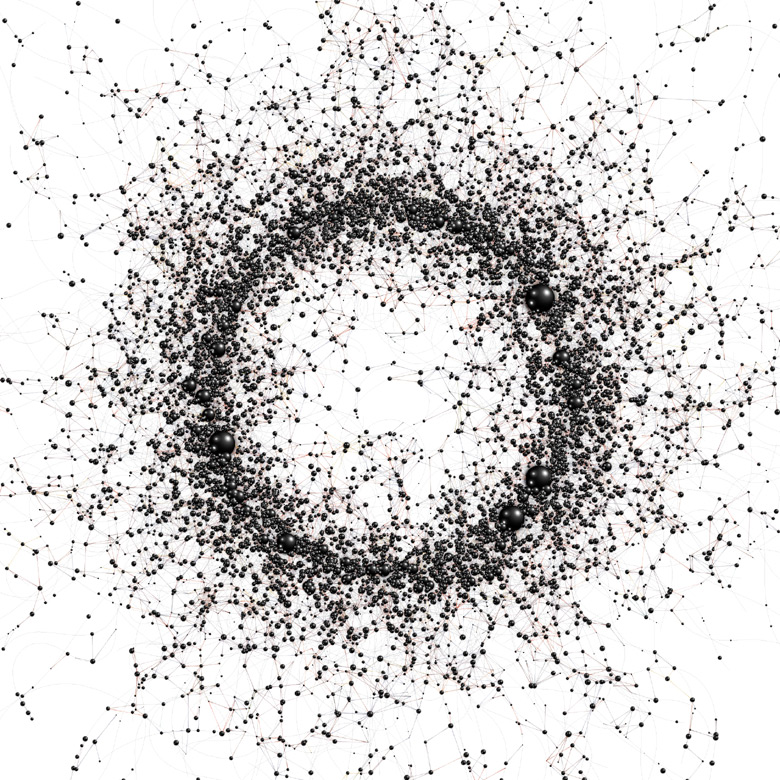
5000 10,000 node instances
After many days of experimentation with the substrate arrangement, I found my favorite in the circular garden seen above. The connection properties of the circular garden produce a special latent feedback network rich in its potential as an emergent system.
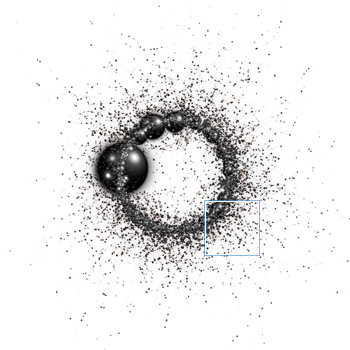
7000
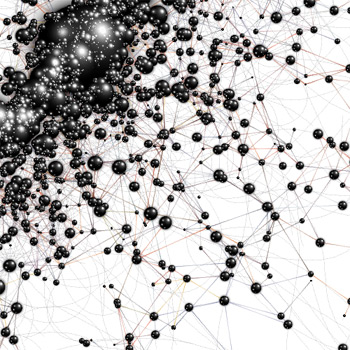
7000d
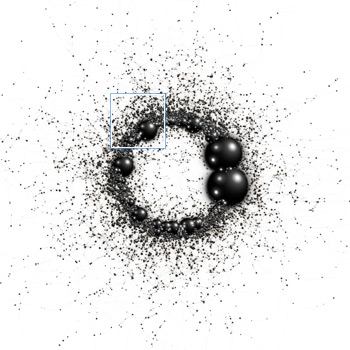
7001
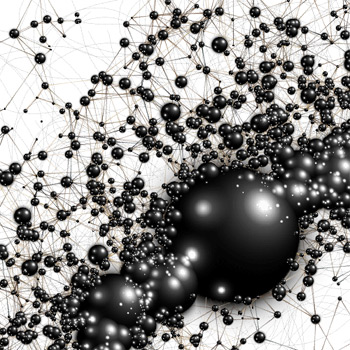
7001d
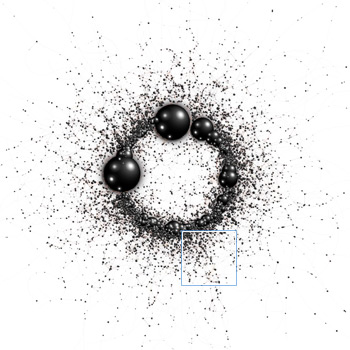
7002
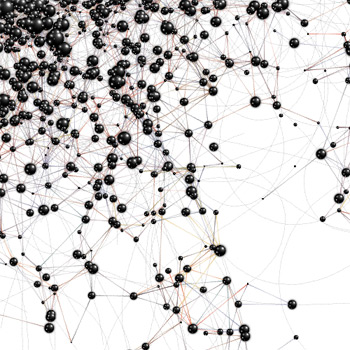
7002d
The graphic rendering of the node garden is a five step process:
First the substrate paths are drawn (light grey and curvy). Substrate paths instantiate nodes as they grow, but the rendering of the nodes is postponed until all paths have been drawn.
Next the nodes are back painted. Back painting includes a solid black circle for the node itself, plus a bit of dark glow to give the illusion the node is embedded in the surface. This process uses the DARKEST image blending mode of Processing so that the white square of the source image does not overdraw the substrate paths.
Node connections are then drawn as faint lines, darker nearer the endpoints.
Next the nodes are painted black once again. This step is required to erase the connection lines within the node itself. I wanted the node connections to appear to stop at the edge of the node, rather than at its center.
Finally, a specular reflection is painted over each node. No ray tracing is actually occurring, the specular is simply a graphic image pre-drawn by hand. This process uses the LIGHTEST image blending mode of Processing.
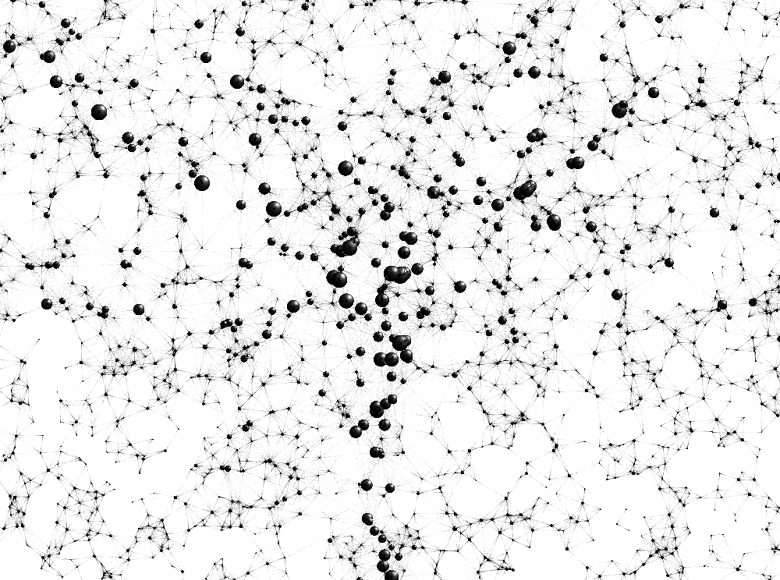
e0000 early rendering of the node garden sans-substrate
Early versions of the node garden just didn’t feel right. The random placement of nodes within a square region produced consistently boring results.