 View at full size
SUBSTRATE
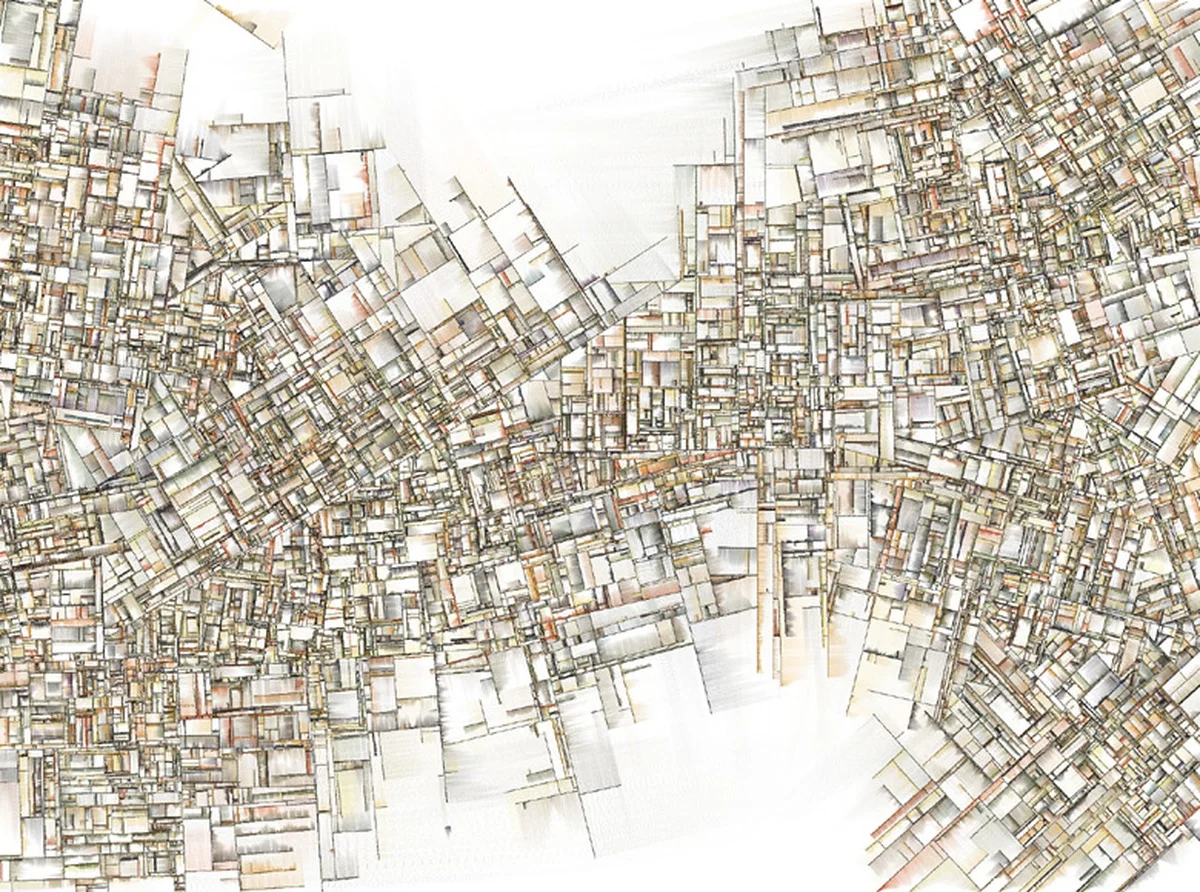
Lines like crystals grow on a computational substrate. A simple perpendicular growth rule creates intricate city-like structures.
Each crack travels in a straight line until it meets another crack or the edge of the field. When it stops, a new crack begins from a random point on an existing one, turned at a right angle. Beside every crack, a sand painter lays translucent grains of color into the open space, filling each region with a soft watercolor. The palette is taken from a painting by Jackson Pollock.
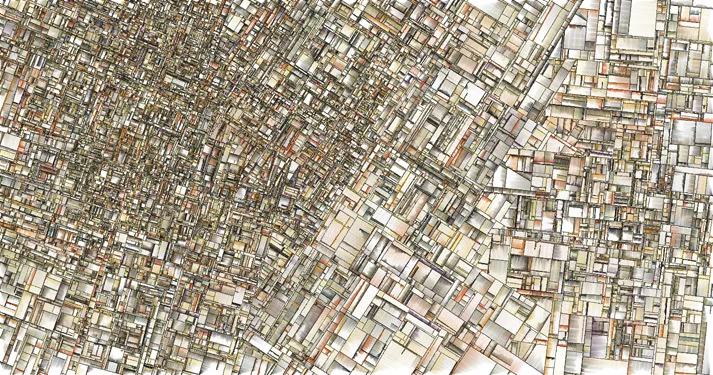
0021 iterated substrate
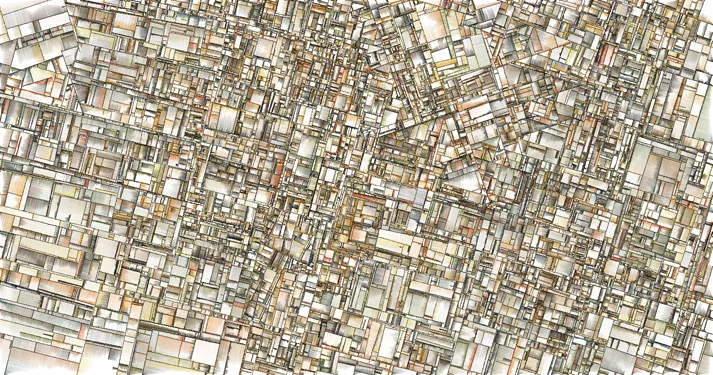
0037 iterated substrate
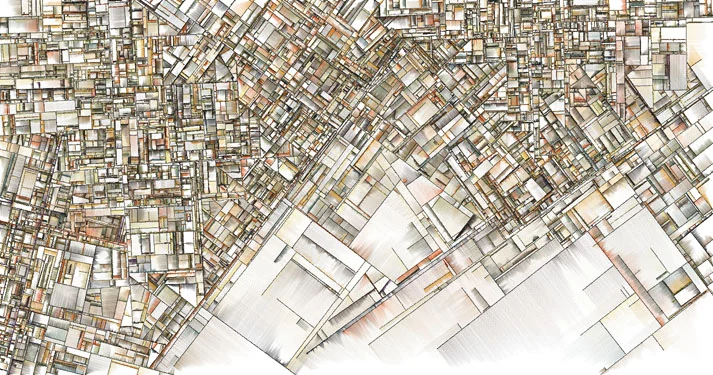
0053 iterated substrate
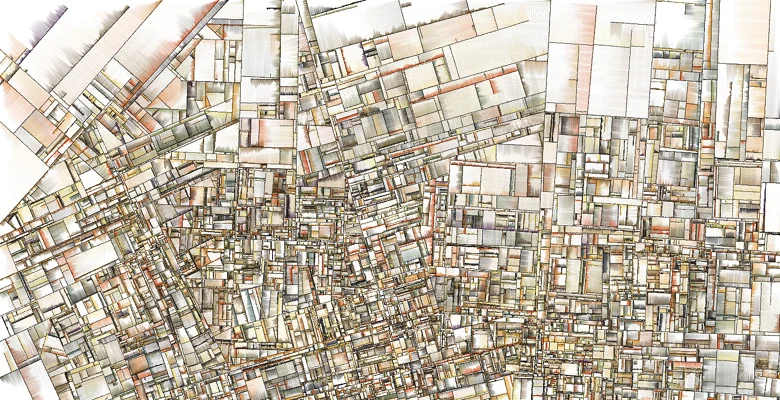
1000 classic computational substrate, color palette stolen from Jackson Pollock
The simple rule, the complex results, the enormous potential for modification; this has got to be one of my all time favorite self-discovered algorithms.
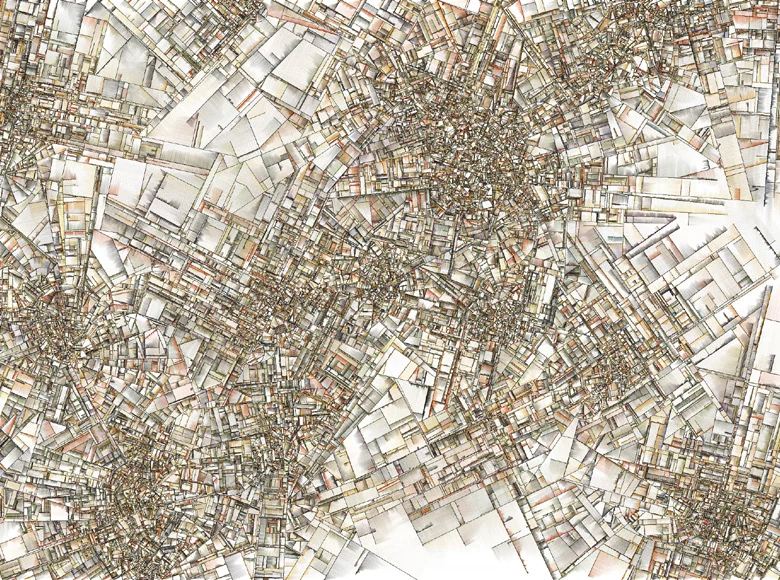
3000 non-linear substrate growth with eleven crystal instances
Allowing the cracks within the substrate to curve, we see even greater irregularity, including isolated structures merging together in complex ways.
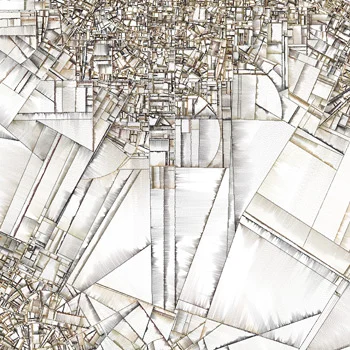
2001 growth catalysts converge in regions of open space
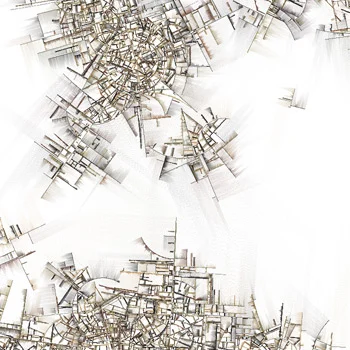
2004 just moments after the growth process has begun
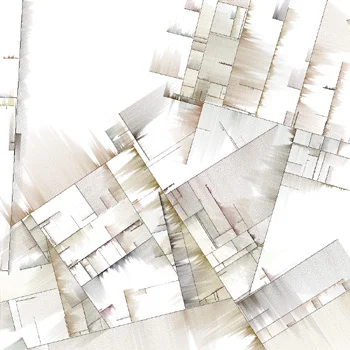
e1000 early substrate rendering with sand painting effect
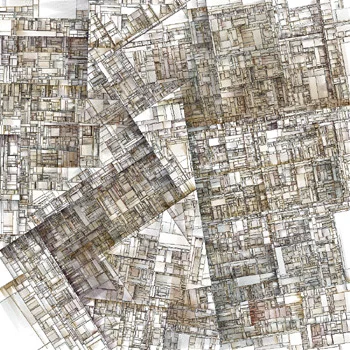
e1001 heavy sand painting highlights larger structures
An early version of Substrate did not confine the watercoloring effect (see Sand Stroke) to regions defined by the cracks.
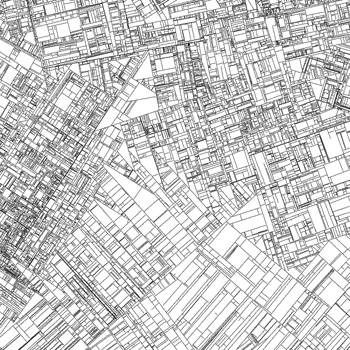
BW0000 early substrate growth without sand painting effect
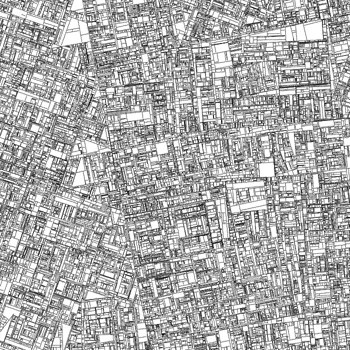
BW0001 extended growth exhibits fractal density
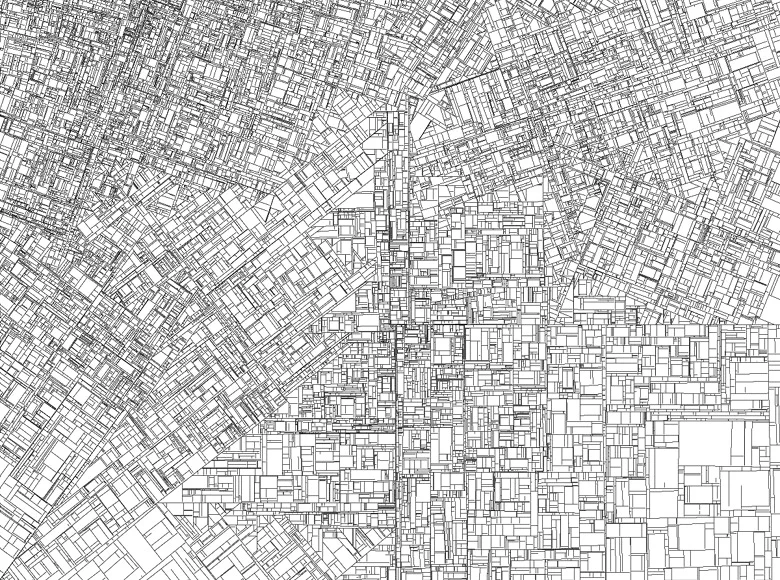
BW1000 detailed linear substrate growth without sand painting effect
Another early version has no watercolor effect at all.
Download Source Code
Programmed in Processing
In Albuquerque, New Mexico, USA
June 2003
Originally published at Complexification