Algorithms
-
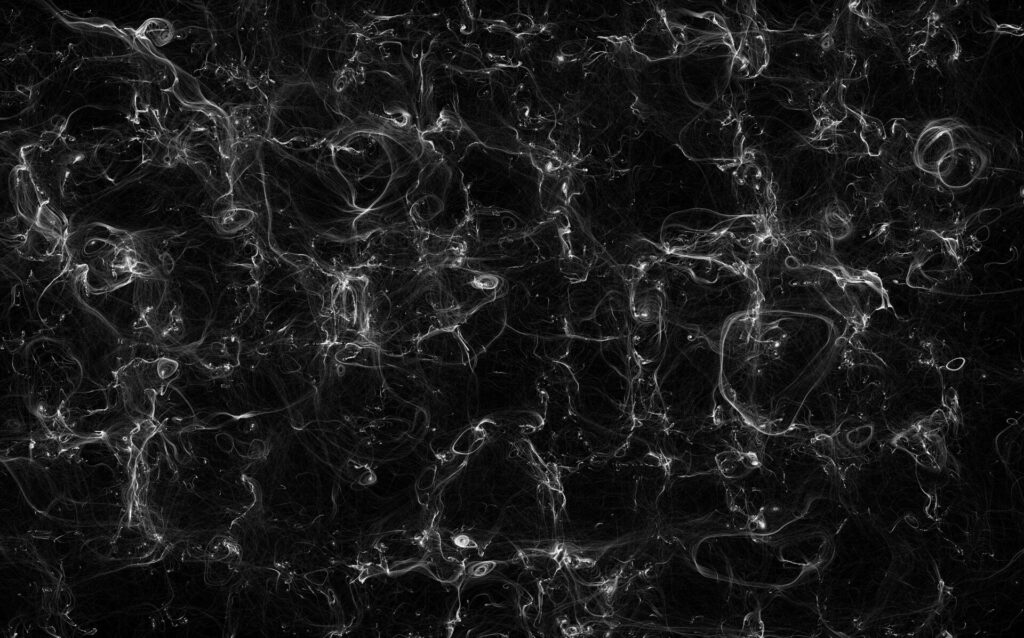
NOISE.FIELD
Particles follow paths derived from a two dimensional Perlin noise function. Paths are rendered with translucent pixels, making common areas bright.
-
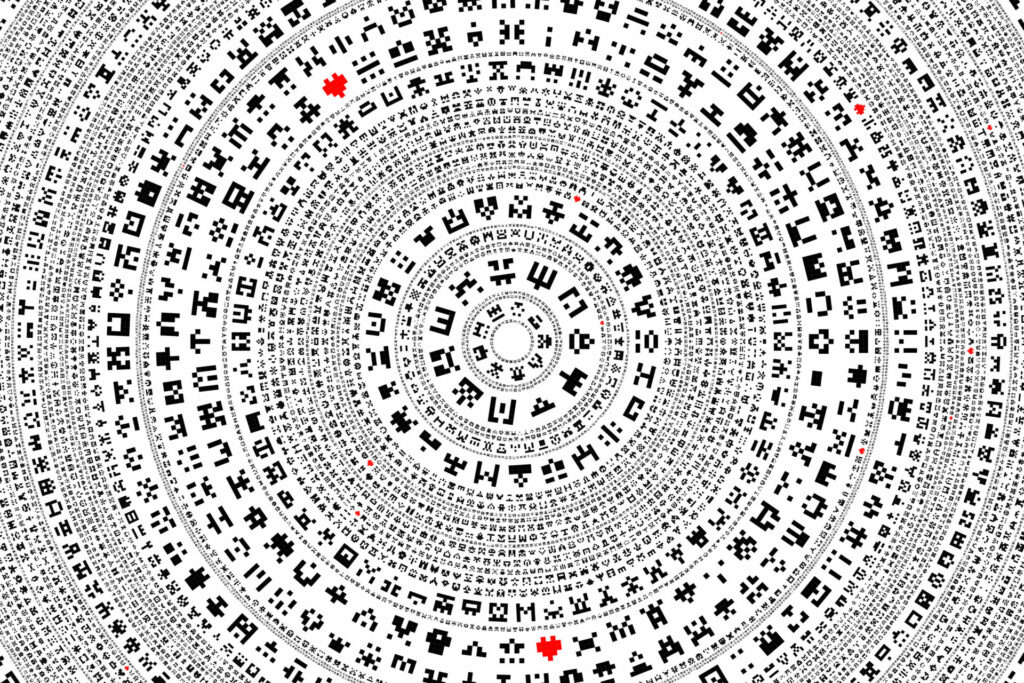
INVADER.SUPER.RING
The Invader is a special grid construction of black and white squares. I have generated millions of them.
-
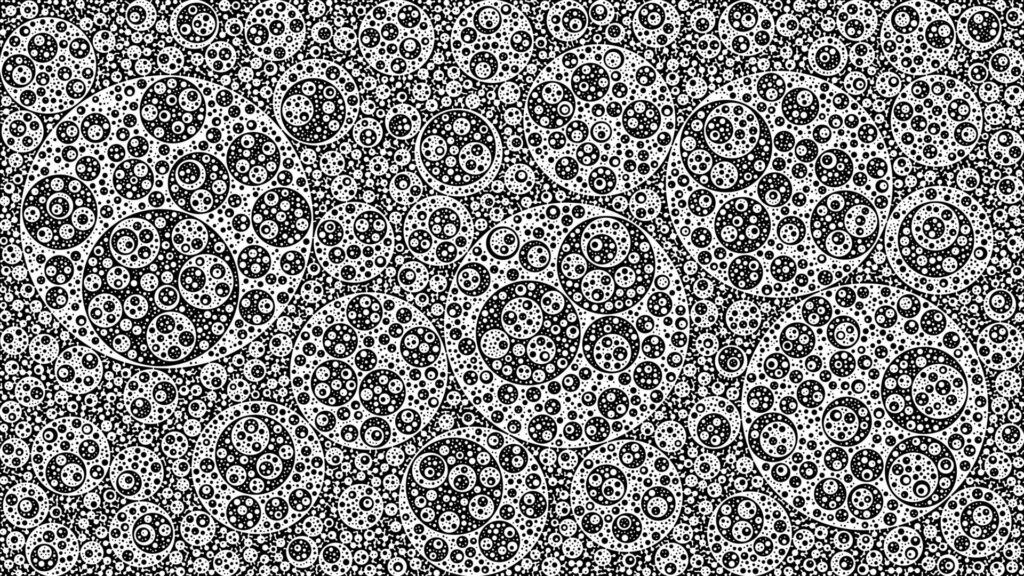
CIRCLES.INSIDE.CIRCLES
Packing circles into a finite space is fun. Especially when you use lazy algorithms that place and test, rather than do any hard math.
-
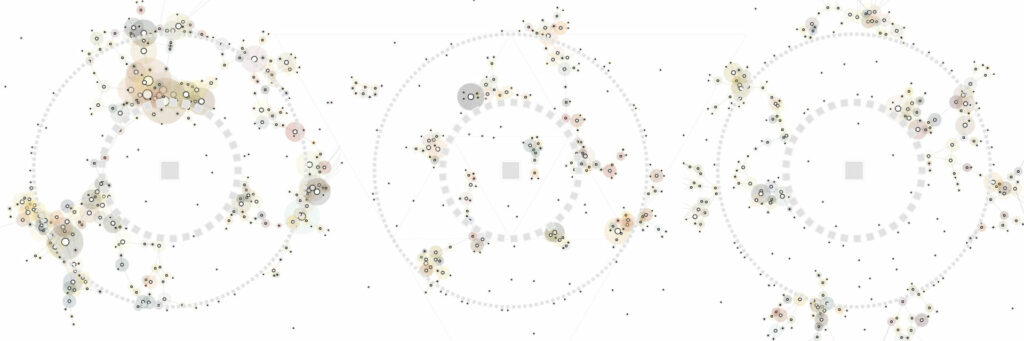
ABANDONED.ETSY.MANDALA
My last project for Etsy. It was to be a mandala, a custom generated visualization of friendships, favorites, and shop activity with you at the center.
-
YARN.STRETCHER
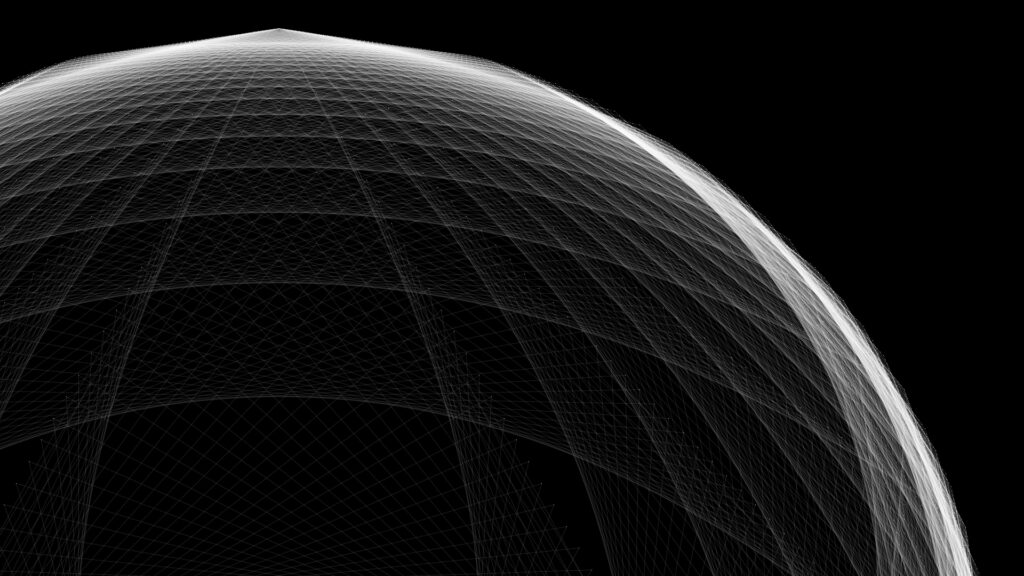
Exploration of a childhood craft stretching yarn between two adjacent lines of pins, many many many times. I often use red in debugging situations.
-
BINARY.AGES
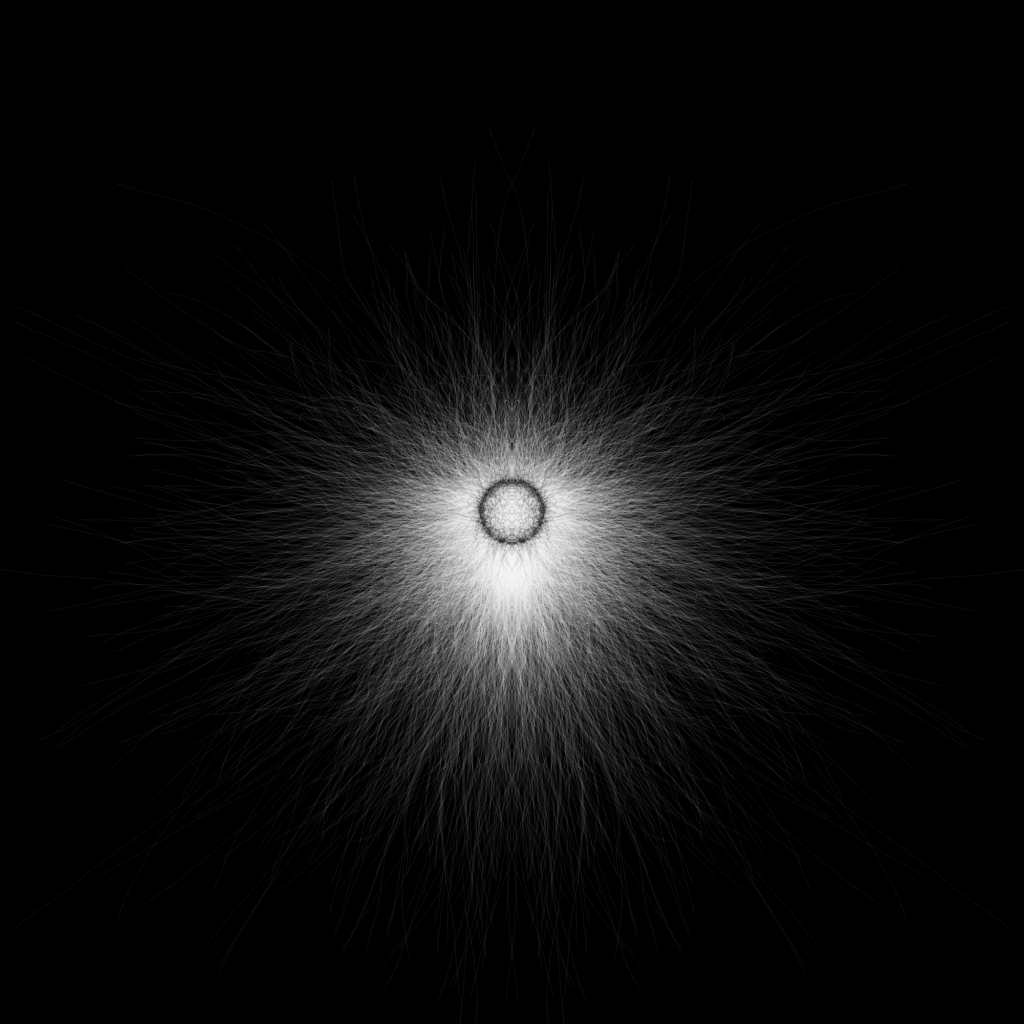
A system of path tracing particles evolves continually from an initial creation event. Ages of darkness play arbitrarily with ages of light.
-
ORBIT.CLOCK
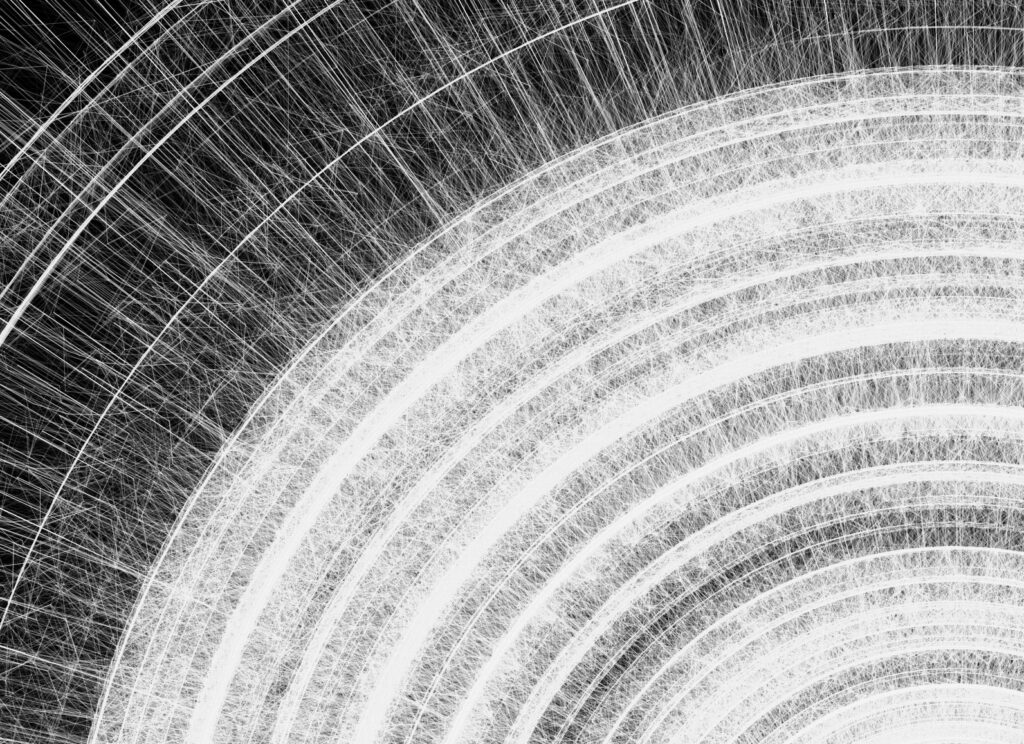
Nodes orbit a central location in groups of variable intervals. Lines connect nearby nodes.
-
NOISE.CIRCLE
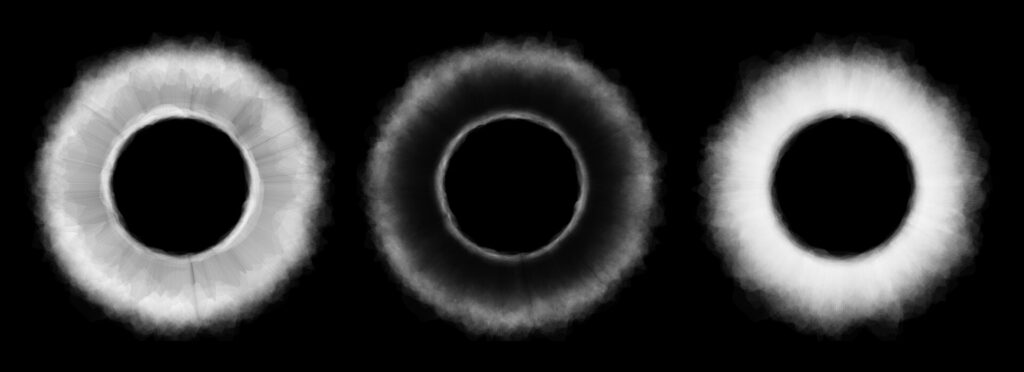
A rotating line of white noise reveals something looking back at me. In this post, the images show my development process.
-
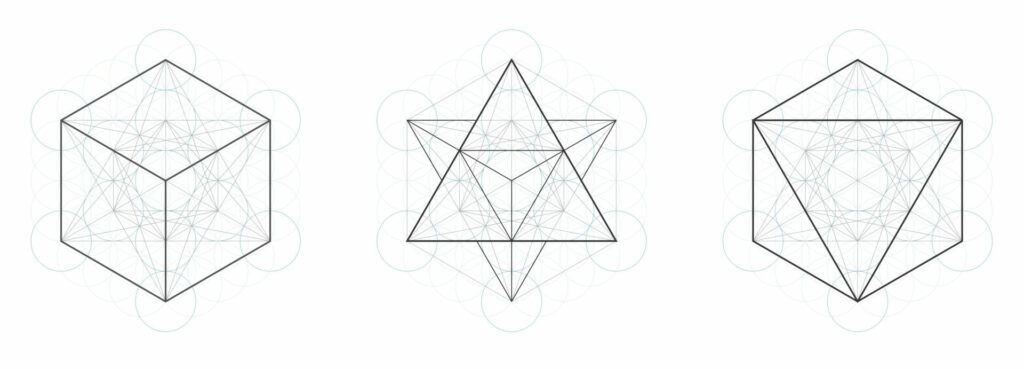
METATRON’S.CUBE
During times of creative drought, I sometimes turn to classic geometric forms. Today I recreated well known constructions from the Metatron Cube.
-
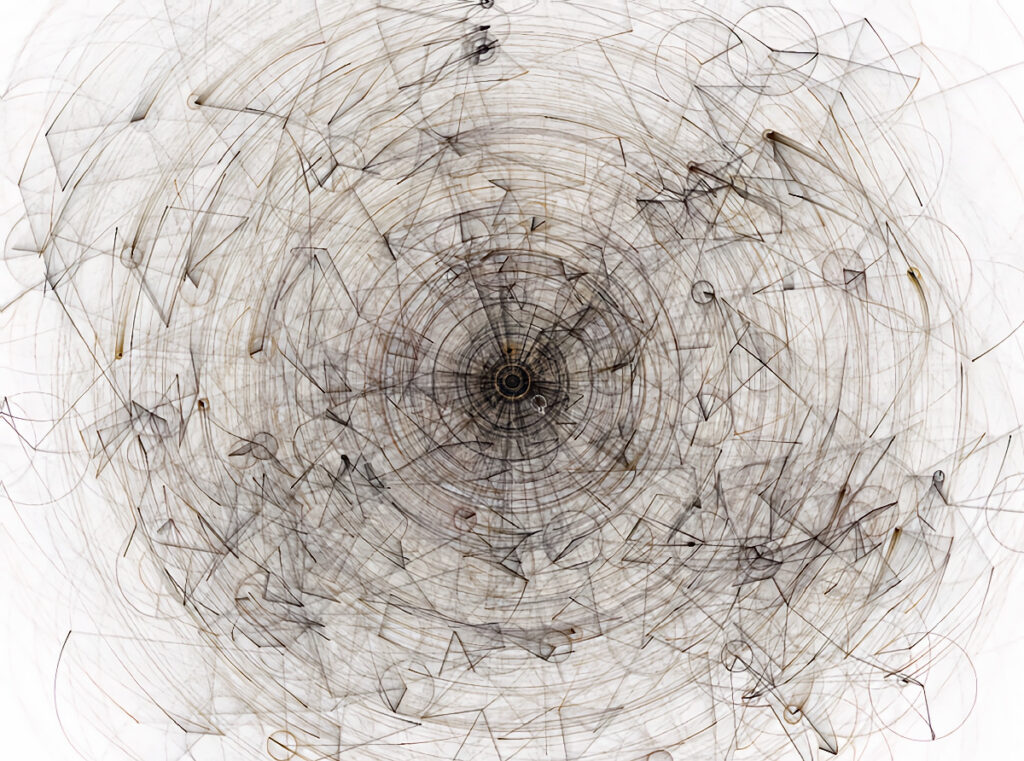
ORBITALS.VARIATION B
The Orbitals is a collection of particles operating on one simple rule: choose another particle in the system and orbit it with a fixed radius at a constant velocity. This is variation B (see Orbitals Variation A).In this variation, a single root particle is instantiated in the center of the stage.
-
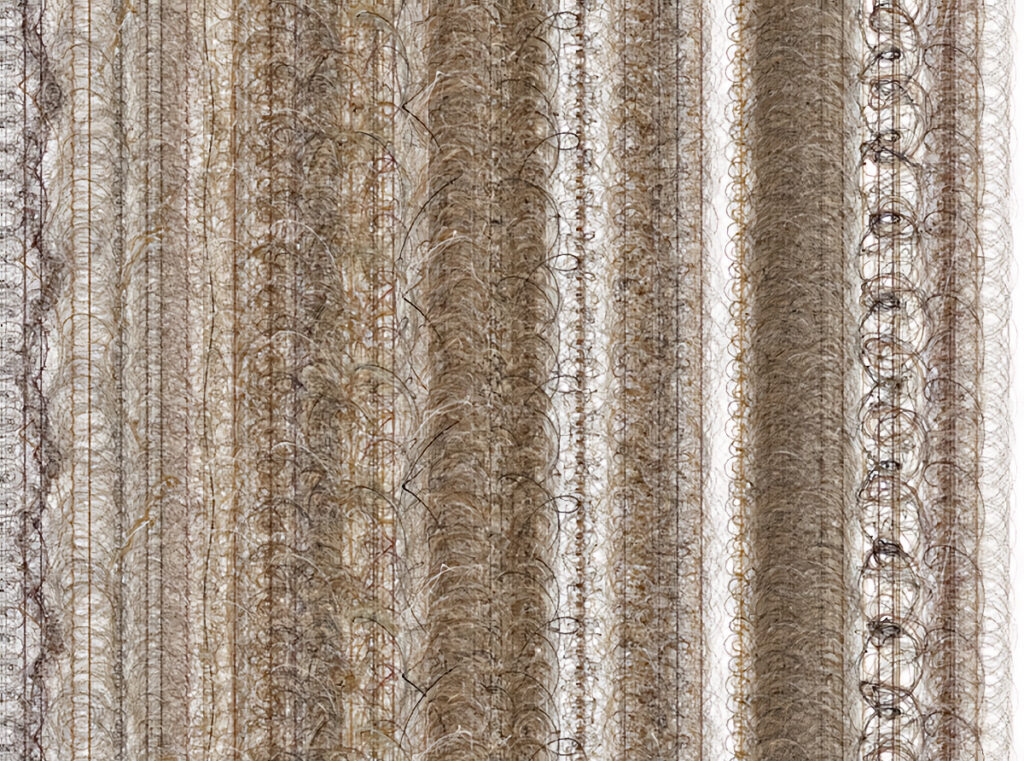
ORBITALS.VARIATION A
The Orbitals is a collection of particles operating on one simple rule: choose another particle in the system and orbit it with a fixed radius at a constant velocity. This is variation A (see Orbitals Variation B).To set the rendering stage, particles are randomly introduced into the system.
-
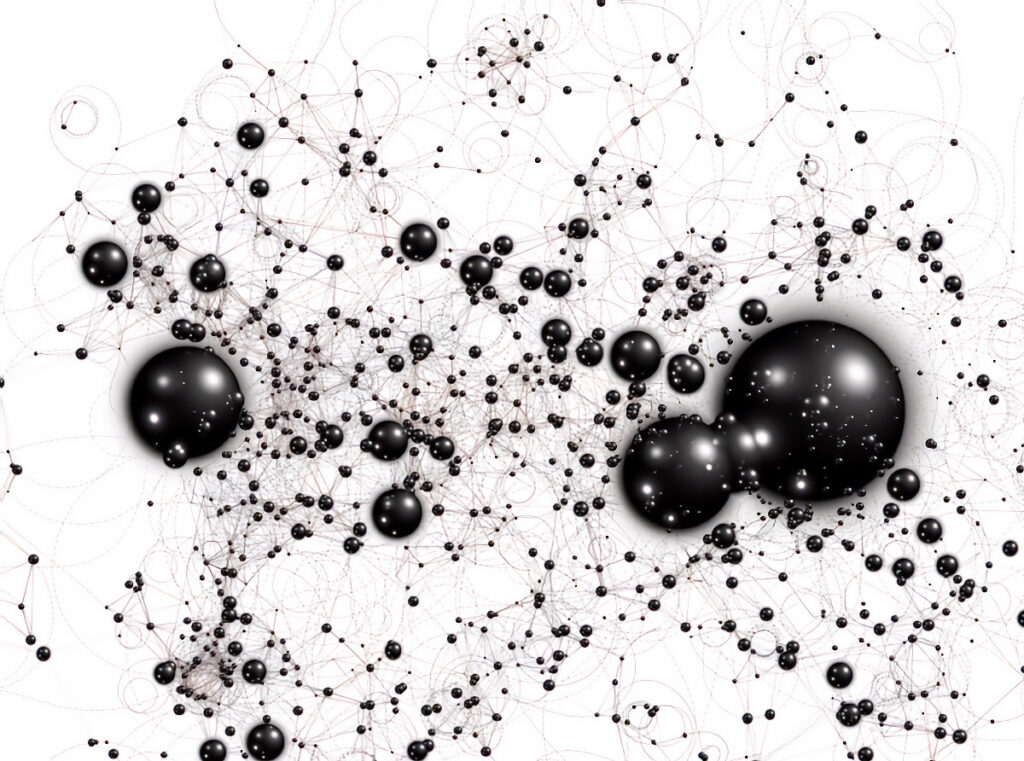
NODE.GARDEN
Nodes are instantiated on irregular curving lines. When connected together, they form a Node Garden.